A Practical Guide to Assisted Living Options in South Florida for Partners Aging Together
Growing older together is something many couples hope for — sharing daily routines, meals, memories, and milestones well into later life. But aging doesn’t always follow the same path for both partners. One spouse may remain active and independent while the other begins to need help with mobility, medication management, memory support, or personal care.
For families in Palm Beach County and across South Florida, this creates an emotional and logistical challenge: how do you find senior living for couples when care needs aren’t the same?
The good news is that today’s senior living communities offer far more flexible solutions than many people realize. Couples no longer have to separate simply because one partner needs more support. With the right guidance and planning, it’s often possible to find assisted living options in South Florida that allow couples to stay together while still receiving individualized care.
This guide walks through what families should know about senior living for couples in Palm Beach County — including available care models, common concerns, and how placement services help simplify the process.
It’s common for partners to age at different rates. One spouse may develop arthritis or balance issues while the other remains physically strong. Cognitive changes may appear in one partner but not the other. Chronic health conditions can also affect independence unevenly.
Some of the most common scenarios include:
These differences don’t mean couples must live apart. But they do require thoughtful care planning.
Modern assisted living options in South Florida are designed to adapt to these realities, offering tiered care levels that support each individual while preserving shared living arrangements whenever possible.
Families often assume senior living means choosing one fixed level of care. In reality, most communities provide multiple care layers that can be adjusted over time.
Some couples begin in independent living while arranging outside caregiving for one partner. This allows both spouses to maintain autonomy while receiving targeted assistance.
This model works well when one partner only needs light help — such as meal preparation, medication reminders, or companionship — and wants to remain in a residential-style environment.
Assisted living is one of the most common solutions for couples with different care needs.
In assisted living communities, each spouse receives care based on their individual assessment. One partner may require daily assistance with personal care while the other lives mostly independently. Both can still share an apartment or suite.
Services typically include:
This flexibility makes assisted living options in South Florida especially appealing for couples who want to stay together while receiving different levels of support.
When one partner develops Alzheimer’s or another form of dementia, families often worry separation is inevitable. Many communities now offer memory care units within the same campus as assisted living.
In these cases, couples may live together in assisted living during early cognitive decline, transition one spouse into memory care later while maintaining frequent visits, or choose communities designed specifically for couples navigating cognitive differences.
This model allows families to balance safety with emotional connection, preserving relationships while ensuring specialized care.
CCRCs provide a full continuum of care — independent living, assisted living, memory care, and skilled nursing — all in one location. Couples can start together in independent living and transition separately as needs change.
While not available everywhere, CCRCs offer long-term stability for couples anticipating evolving care needs.
Beyond logistics, there’s a deeply personal aspect to these decisions. Many seniors fear losing independence or becoming a burden. Couples often worry about being separated after decades together.
These emotions are completely natural.
Staying together provides comfort, continuity, and emotional security. Shared routines help reduce anxiety, especially when one partner is experiencing health changes. Being able to see each other daily supports mental well-being and strengthens resilience during transitions.
That’s why senior living for couples in Palm Beach County increasingly focuses on keeping partners connected whenever possible.
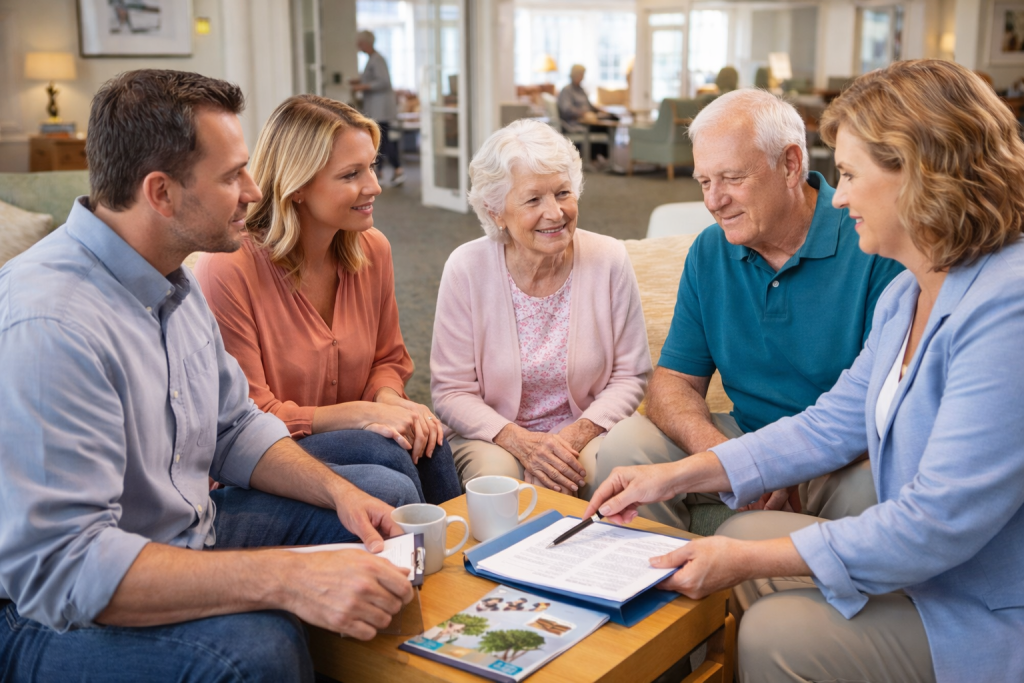
Choosing the right community involves more than comparing floor plans or amenities. Families should look closely at how care is delivered and whether the community can truly support both partners long term.
Important factors include individual care assessments, the ability to age in place, apartment configurations for couples, memory care integration, and emotional support and engagement.
Each spouse should receive a separate evaluation. One partner may need daily hands-on care while the other does not. A good community tailors services accordingly.
Ask whether the community allows residents to increase care levels without relocating. This is especially important if one partner’s condition is likely to progress.
Not all assisted living communities offer shared units for couples. Confirm whether apartments are designed to accommodate two residents comfortably, including accessibility features.
If cognitive decline is already present or anticipated, it’s helpful to choose a community that provides memory care onsite.
Look beyond medical care. Social activities, wellness programs, and community culture play a huge role in quality of life — especially for couples adjusting to change.
Families navigating senior living for couples often encounter similar obstacles.
One of them isn’t ready to move. It’s common for the healthier partner to resist change. Starting with tours, short stays, or companion services can ease the transition.
They want to stay together at all costs. Most communities honor this whenever safely possible. Care plans are built around preserving shared living while still meeting individual needs.
The care needs keep changing. This is exactly why flexible assisted living options in South Florida are so valuable. Care levels can be adjusted gradually instead of requiring sudden moves.
We don’t know where to start. This is where professional placement guidance becomes invaluable.
Searching for senior living for couples in Palm Beach County can feel overwhelming. There are dozens of communities, each offering different services, pricing structures, and care models. Families are often making decisions during stressful moments, with limited time and incomplete information.
Elder Care Finders specializes in guiding families through this process with clarity and compassion.
Rather than offering generic recommendations, placement specialists take time to understand each partner’s current health and care needs, future care considerations, lifestyle preferences, budget and financial planning, and desired location within Palm Beach County or South Florida.
From there, they identify assisted living options that truly match both spouses — not just on paper, but in real-world suitability.
Support often includes personalized community recommendations, scheduling tours and coordinating visits, explaining care levels and pricing structures, helping families compare options objectively, advocating for couples who want to stay together, and providing ongoing support as needs evolve.
This hands-on approach saves families time, reduces stress, and leads to better long-term outcomes.
The best time to explore senior living options for couples is before a crisis occurs. Early planning allows couples to participate in decisions, tour communities together, and transition gradually.
Waiting until after a hospitalization or sudden decline limits choices and increases pressure.
Even if both partners are currently doing well, learning about assisted living options in South Florida now creates a roadmap for the future — one that keeps couples together whenever possible.
One of the biggest misconceptions about senior living is that it separates couples or diminishes independence. In reality, today’s communities are designed to preserve relationships, routines, and dignity while adding the support seniors need to thrive.
For couples with different care needs, the right environment offers safety without isolation, personalized care without separation, community without loss of privacy, and support without sacrificing independence.
Aging together is still possible — it just requires the right setting.
Senior living for couples in Palm Beach County doesn’t have to be an all-or-nothing decision. With flexible assisted living options in South Florida, partners can remain together while receiving individualized care that evolves over time.
Whether one spouse needs light assistance or specialized memory support, there are communities designed to meet both needs under one roof.
With professional guidance from Elder Care Finders, families can navigate this journey with confidence — finding solutions that protect health, preserve relationships, and support quality of life for both partners.
If you’re exploring senior living for couples and feeling unsure where to begin, remember: you don’t have to do it alone. The right plan can help your loved ones continue their journey together — safely, comfortably, and with dignity.