Move-in day is a milestone, but it is not the moment that tells a family whether a placement is truly working. The more meaningful signs often appear gradually: a parent begins eating regular meals again, recognizes a neighbor in the hallway, looks forward to an activity or feels comfortable asking a staff member for help.
During Healthy Aging Month, it is worth looking at the benefits of senior living communities through a practical lens. The right independent living, assisted living or memory care setting does more than provide an apartment. It can make healthy routines easier to maintain by bringing nutritious meals, social contact, appropriate activity and support into everyday life.
That does not mean every community is right for every senior, or that every transition is effortless. A successful placement depends on the person’s care needs, personality, budget, preferences and future needs. When those pieces align, however, the first 90 days can reveal encouraging changes.
Healthy aging is not one program or one perfect habit. It is the accumulation of ordinary things that happen consistently: eating well, moving safely, staying connected, managing health conditions and having reasons to participate in the day.
The National Institute on Aging encourages social connection, physical activity, healthy eating and regular healthcare as important parts of healthy aging. The Centers for Disease Control and Prevention also notes that strong social connections can support longer, healthier lives and may help protect against several serious health concerns.
A well-matched senior living community can reduce some of the practical barriers that make these habits difficult at home. Meals are nearby. Activities are on the calendar. Neighbors are down the hall. Transportation or help with daily tasks may be available, depending on the community and level of care.
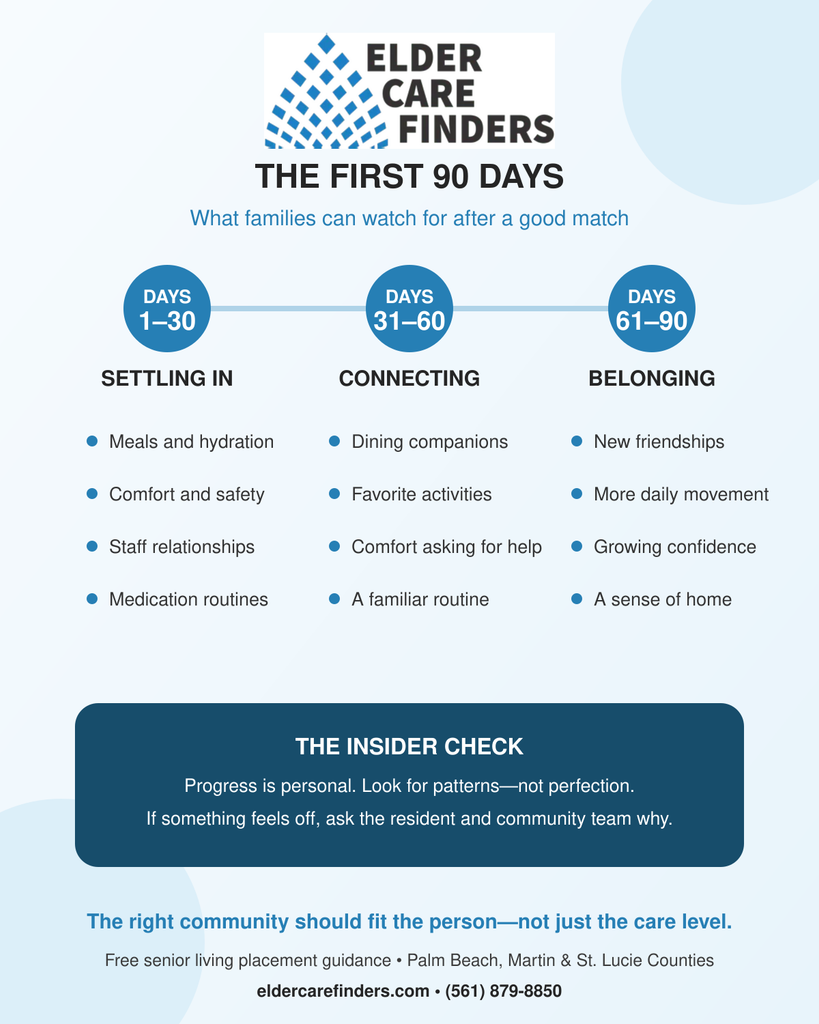
Adjustment is personal. Some residents begin participating quickly; others need more time to learn the environment and build trust. Rather than expecting a dramatic transformation, families can look for small patterns across three stages.
The first month is about orientation. The senior is learning a new apartment, new faces, meal times and daily rhythms. Homesickness or fatigue may occur, even when the move was the right decision.
Helpful early signs include eating and drinking more consistently, becoming familiar with staff, finding the dining room without stress and knowing how to request assistance. If the community provides medication support, the family should confirm exactly what is included, who provides it and how changes or missed doses are communicated.
This is also the time to address small problems quickly. An uncomfortable dining assignment, an activity schedule that does not match the resident’s interests or confusion about laundry can affect adjustment more than families expect.
During the second month, the question shifts from “Is everything set up?” to “Is this beginning to feel like daily life?” A resident may start sitting with the same people at meals, greeting staff by name or choosing one or two activities that genuinely appeal to them.
Social connection matters because isolation is more than an emotional concern. The CDC identifies loneliness and social isolation as health risks, and older adults are among the groups more likely to experience them. A community cannot manufacture friendship, but it can create repeated, low-pressure opportunities for connection.
Activity can also become easier when it is convenient. Federal physical-activity guidance recommends that older adults include aerobic, muscle-strengthening and balance activities as their abilities and health conditions allow. A walk to lunch, a chair-exercise class, gardening or supervised balance work can make movement part of the day rather than another appointment to arrange.
By the third month, families can look for signs that the resident is becoming part of the community rather than simply living in it. They may mention a friend, remind the family about an upcoming event, navigate the setting with more confidence or express preferences about their routine.
For relatives, this phase can bring a different kind of relief. Visits may become less focused on groceries, household tasks and crisis prevention—and more focused on conversation and time together. The family can begin returning to its role as family while the community handles the responsibilities it has agreed to provide.
Shopping, cooking and eating alone can become difficult or unappealing. Regular dining schedules, meal choices and company at the table may make it easier for a senior to eat consistently. Families should still ask how the community handles dietary needs, food preferences, hydration and changes in appetite.
Connection does not require attending every event. A familiar server, a neighbor at lunch, a weekly card game or a quiet conversation in the courtyard can all create a sense of belonging. The best match is a community whose pace and personality feel natural to the resident.
When safe walking areas, fitness programs and activities are close by, movement may become easier to include in daily life. The right choices depend on the senior’s abilities and medical guidance; participation should be encouraged without becoming pressure.
Features such as accessible layouts, emergency-response systems and available assistance can reduce avoidable risk. The goal is not to remove every choice. It is to provide the right amount of support while preserving privacy, dignity and control.
In assisted living or memory care, medication assistance may help create a more consistent routine when it is included in the resident’s care plan. Services differ significantly between communities, so families should verify capabilities, fees, staffing and communication procedures in writing.
A beautiful lobby cannot compensate for the wrong care level, an unaffordable fee structure or a culture that does not suit the resident. Before deciding, families should compare:
This is why Elder Care Finders begins with the individual instead of a generic directory. Our senior living placement services help families compare appropriate independent living, assisted living and memory care options according to care needs, lifestyle, location and budget.
Elder Care Finders serves families throughout Palm Beach County, Martin County and St. Lucie County. We help assess needs, narrow the search, coordinate tours, compare communities and support the transition. Our placement guidance is provided at no cost to families.
The first 90 days should not be treated like a test the resident must pass. They are a period for listening, adjusting and watching for the small signs that a new setting is becoming home.
If your family is wondering whether the right community could make daily life safer, healthier and more connected, call Elder Care Finders at (561) 879-8850 or schedule a free consultation.
There is no universal timeline. Personality, health, the circumstances of the move and the quality of the match all affect adjustment. Families should look for gradual progress, keep communication open and raise concerns early.
Participation can begin small. Ask what your parent actually enjoys and whether the community can offer a quieter introduction, a dining companion or one-on-one encouragement. A full calendar only helps when the activities fit the person.
Look beyond attendance numbers. Consistent meals, comfort with staff, a safer routine, growing familiarity and even one meaningful connection may be stronger indicators. Ask the resident, family and community team what each is observing.
This article is for general educational purposes and is not medical advice. A senior’s healthcare team should guide decisions involving health conditions, medications, nutrition and physical activity.