Dementia is a progressive neurological condition that affects memory, thinking, and behavior. As the condition advances, it often becomes necessary to explore long-term care options to ensure their safety, comfort, and quality of life.
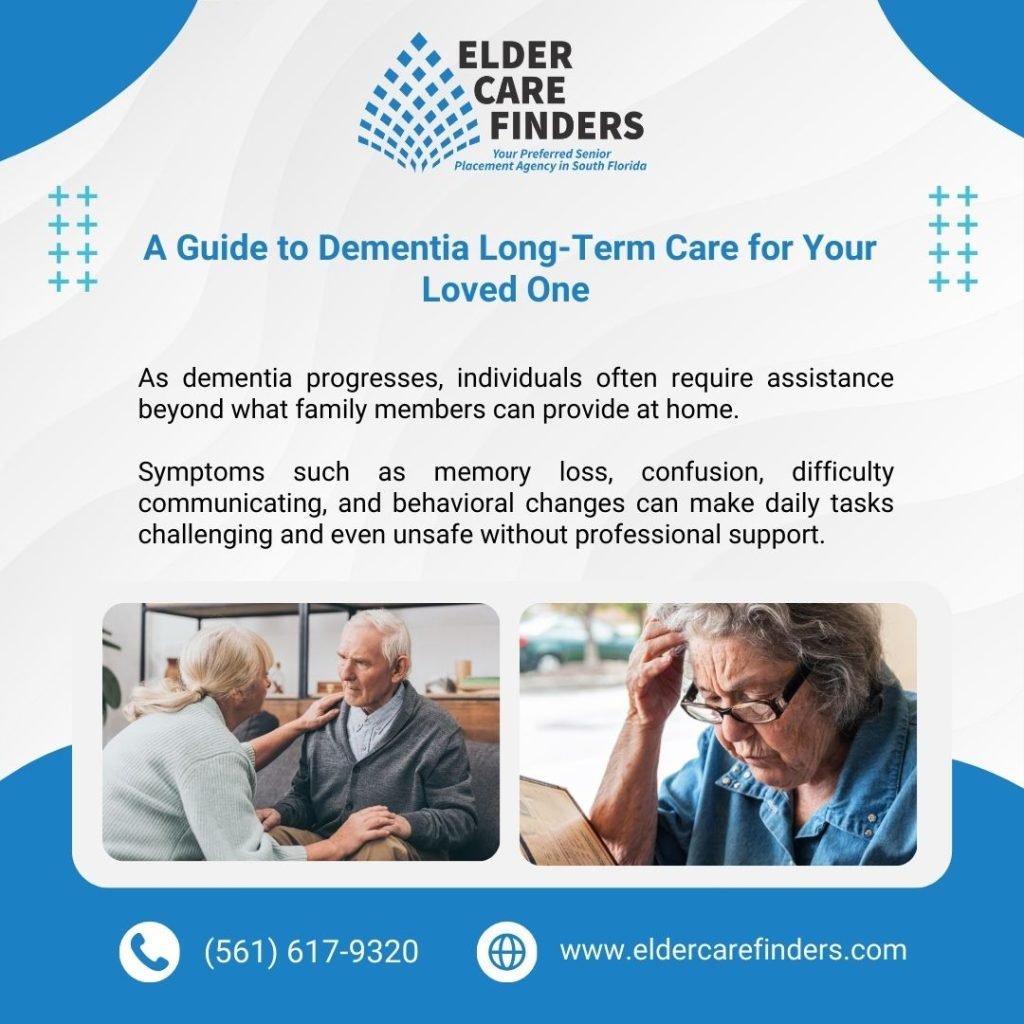
Understanding these options and knowing how to choose the right one is crucial for both your loved one's and your family’s peace of mind.
Dementia is not a single disease but a term used to describe a group of symptoms affecting memory, thinking, and social abilities severely enough to interfere with daily life.
Alzheimer’s disease is the most common form of dementia, but other types include vascular dementia, Lewy body dementia, and frontotemporal dementia.
As dementia progresses, individuals often require assistance beyond what family members can provide at home. Symptoms such as memory loss, confusion, difficulty communicating, and behavioral changes can make daily tasks challenging and even unsafe without professional support.
There are many different types of care options for patients with dementia, such as:
In-home care allows your loved one to remain in a familiar environment while receiving professional assistance. Services may include help with daily tasks such as bathing, dressing, medication management, and meal preparation.
| Pros | Cons |
| Maintains familiarity and comfort for your loved one. | It can become expensive as care needs increase. |
| Offers familiarity with the level of care provided. | Requires modifications to the home for safety. |
| Allows family members to stay closely involved. |
Adult daycare centers provide supervised care during daytime hours. These centers offer social activities, meals, and sometimes medical care.
| Pros | Cons |
| Provides a structured routine for your loved one. | It may not be suitable in advanced stages of dementia. |
| Gives family caregivers a break. | Transportation to and from the facility may be required. |
| Encourages social interaction. |
Another type of long-term care for dementia is assisted living facilities. This care option offers a combination of housing, personal care services, and social activities. Some facilities even have specialized memory care units for dementia patients.
| Pros | Cons |
| Provides a safe, structured environment. | They may not be equipped to handle advanced dementia needs. |
| Staff are trained in dementia care. | Costs can add up quickly. |
| Opportunities for socialization and group activities. |
Nursing homes, also known as skilled nursing facilities, provide round-the-clock medical care and supervision. These facilities are often suited for individuals in the later stages of dementia.
| Pros | Cons |
| Comprehensive medical care is available on-site. | It may feel institutionalized to some. |
| Staff are experienced in managing severe dementia symptoms. | It can be emotionally challenging for families and the individual. |
| Offers peace of mind for families. |
Memory care units are specialized facilities designed specifically for individuals with dementia. This type of long-term care for dementia provides a secure environment and programs tailored to cognitive and behavioral needs.
| Pros | Cons |
| Expertise in dementia care. | Higher costs compared to other options. |
| Focus on cognitive and emotional well-being. | Limited availability in some areas. |
| Secure environment to prevent wandering. |
Choosing the right long-term care option for a loved one with dementia can feel overwhelming, but breaking it down into key steps can make the process more manageable.
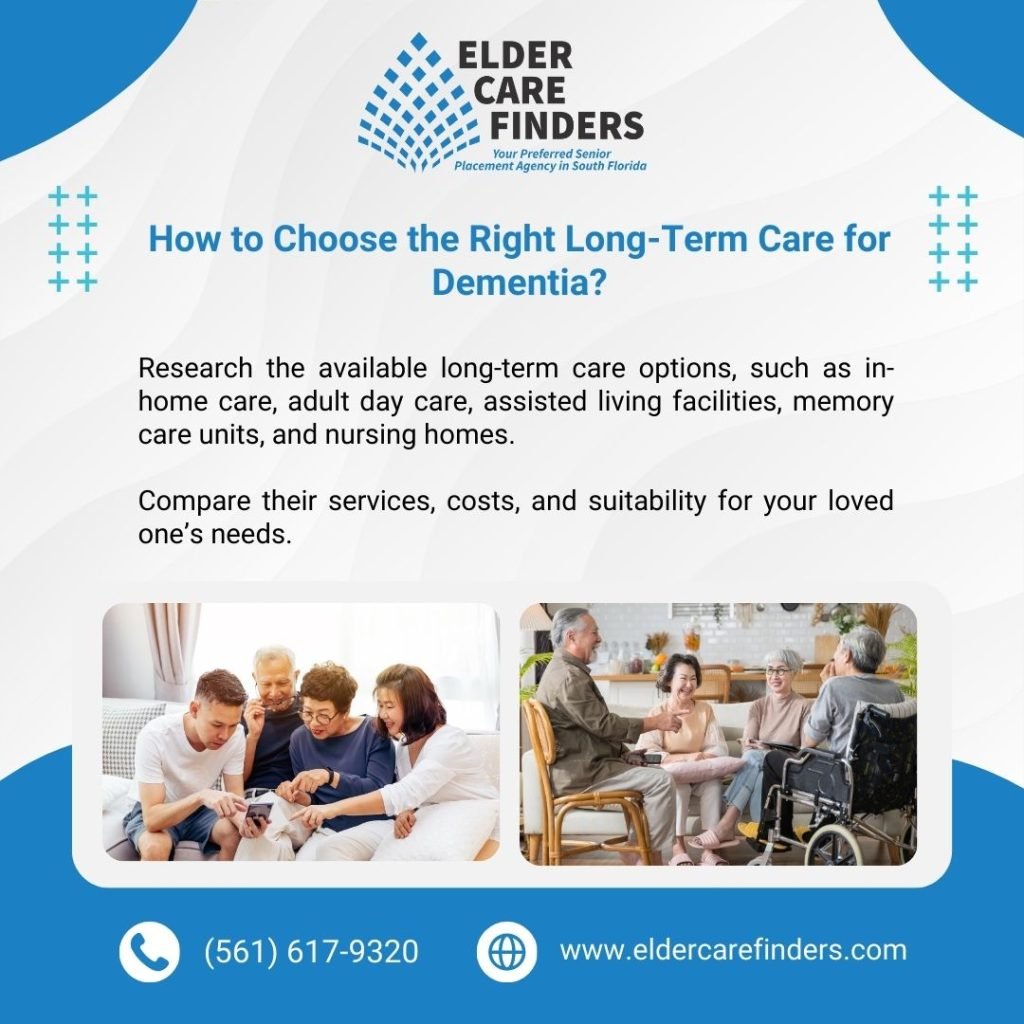
Here’s what you can do:
Start by evaluating the level of care your loved one requires. Consider factors such as:
When considering professional care options like assisted living or memory care units, take time to research and visit facilities. Observe the cleanliness, staff interactions, safety measures, and daily activities. Ask questions about staff training, emergency protocols, and family involvement.
Long-term care can be costly, so reviewing your financial resources and exploring options like long-term care insurance, Medicaid, or veterans’ benefits is important. Speak with a financial advisor if necessary.
Whenever possible, involve your loved one in the decision-making process. Respect their preferences and address their concerns.
While they may not be able to fully articulate their wishes, small decisions like choosing a room decoration or facility can help them feel more in control.
You don’t have to make these decisions alone. Reach out to geriatric care managers, social workers, or senior care agencies like Elder Care Finders. They can provide memory care or assisted living placement services and valuable insights based on your situation.
Finding the right dementia long-term care facility for a loved one with dementia is one of the most important decisions you can make, and it’s not one you have to face alone.
At Elder Care Finders, we understand how overwhelming this process can feel. That’s why we specialize in helping families like yours find the perfect facility that meets your loved one’s unique needs.
Our team at Elder Care Finders assists clients with finding independent living communities, memory care, senior living home, assisted living, as well as respite care for short-term/seasonal residencies. Our unique elder care services include:
As part of the Horizon Care Services family, we are proud to have served seniors and their families in South Florida for over 20 years. Check out the different locations and areas we serve:
Elder Care Finders is part of a network of trusted companies that provide healthcare support to individuals. You can check out our sister companies below:
The material contained on this site is for informational purposes only and DOES NOT CONSTITUTE THE PROVIDING OF MEDICAL ADVICE, and is not intended to be a substitute for independent professional medical judgment, advice, diagnosis, or treatment. Always seek the advice of your physician or other qualified healthcare providers with any questions or concerns you may have regarding your health.